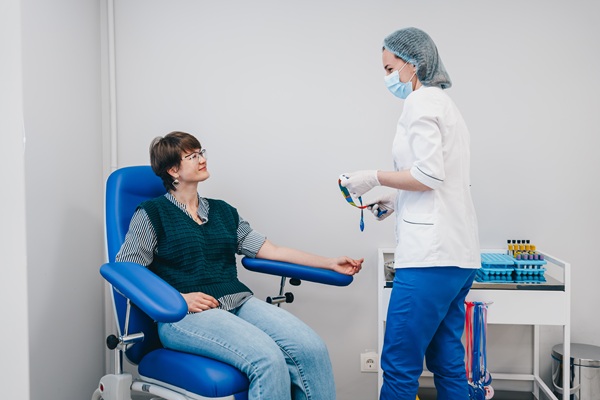
Preparing for HIV testing is not physically difficult as patients will simply give a blood sample or a painless cheek swab sample at a physician's office. Emotionally, getting ready for the outcome of the test may be difficult. Consider the following information to determine whether you need to undergo HIV testing and learn how to prepare for the test itself as well as its results.
Who may need HIV testing?
According to HIV.gov, one in eight Americans with HIV is not aware of it. If a patient suspects he or she may have contracted HIV, it is important to get tested to know for sure and to start making a treatment plan with a qualified physician.
Who is at high risk for HIV?
Any sexually active person is at risk for HIV, and most patients are advised to get tested for HIV at least one time after becoming sexually active. People who use injectable drugs are at high risk for spreading the disease to others as well. Patients who have a higher than average risk for contracting HIV are members of the following categories:
- Men who have sex with men
- Anyone who has had sex with an HIV-positive individual
- Anyone who has shared needles or other injectable drug paraphernalia with another person
- Anyone who has sought treatment for or been diagnosed with another sexually transmitted infection
- Anyone who has had sex with someone who falls into the above categories
What types of HIV testing are there?
Typically, HIV testing can be performed in an urgent care center a primary care office. Self-testing may be an option for some patients, but patients who are being tested for the first time may want to go to a doctor's office to ensure that the results are valid. The tests do not require physical preparation such as fasting. Simply arrive at the appointment and give a blood sample or allow the inside of a cheek to be swabbed. Patients will receive results in one to three days.
If a patient is sexually active with multiple partners, it is a good idea to get tested every few months. A physician will be able to advise patients further on that matter.
How to prepare for HIV testing
As stated above, the tests do not require patients to do anything out of the ordinary. If a patient has a fear of needles, asking in advance whether the cheek swab could be performed instead is a consideration.
Accepting the reality of HIV, and preparing oneself for a positive test, can be mentally and emotionally draining. The judgment and stigma that often come with an HIV diagnosis can make opening up to others doubly difficult. Talking to a trusted physician, as well as nonjudgmental loved ones, can ease the burden during the waiting period as well as afterward if the test is positive.
Conclusion
Speak to a physician if you have more questions about HIV testing or what results mean. Remember that HIV treatment has progressed dramatically within the past two decades and simply testing positive for the virus is not necessarily a worst-case scenario.
Preparing for any type of medical testing can be emotionally challenging. If you suspect the need for HIV testing, please call our office today to schedule an appointment.
Check out what others are saying about our services on Yelp: HIV Testing in Fairfax, VA.
Recent Posts
The rhinovirus causes the common cold. It is a pathogen capable of making you miserable and forcing you to stay home for days. Understanding its symptoms can tell you to go to the urgent care facility early. If you want to know the common cold symptoms, here are the details.An individual sneezes when there is…
A person with a common cold can also have a sore throat and mild body pain. These symptoms can prevent you from doing your daily tasks. However, taking pain relievers can help relieve the discomfort. If you want to know more about the pain reliever you can take for your common cold, here are the…
Wondering whether your next blood test should include a cholesterol check? Read on to learn at what age you should start considering checking your cholesterol numbers. If you are in your 20s or 30s and healthy, job stress and money are probably your primary concerns, not your cholesterol. However, having a cholesterol check and knowing…
It should not surprise you if you get the common cold this year. The illness is appropriately named; it may be the most common sickness that people encounter. Just about anyone is familiar with colds and what this condition feels like. There are many symptoms and effects, including the production of mucus. However, this should…